
The lonely tree has a posse
Too much gloom? A short reflection on environmental and cultural renewal via self seeded trees and plastic flowers. There is something compelling about a lonely tree... not just for Instagram.

There is an oak tree on the hill above my Great Taid (grandfather)’s house at the southern end of North Wales. You can see the tree from down in the town below.
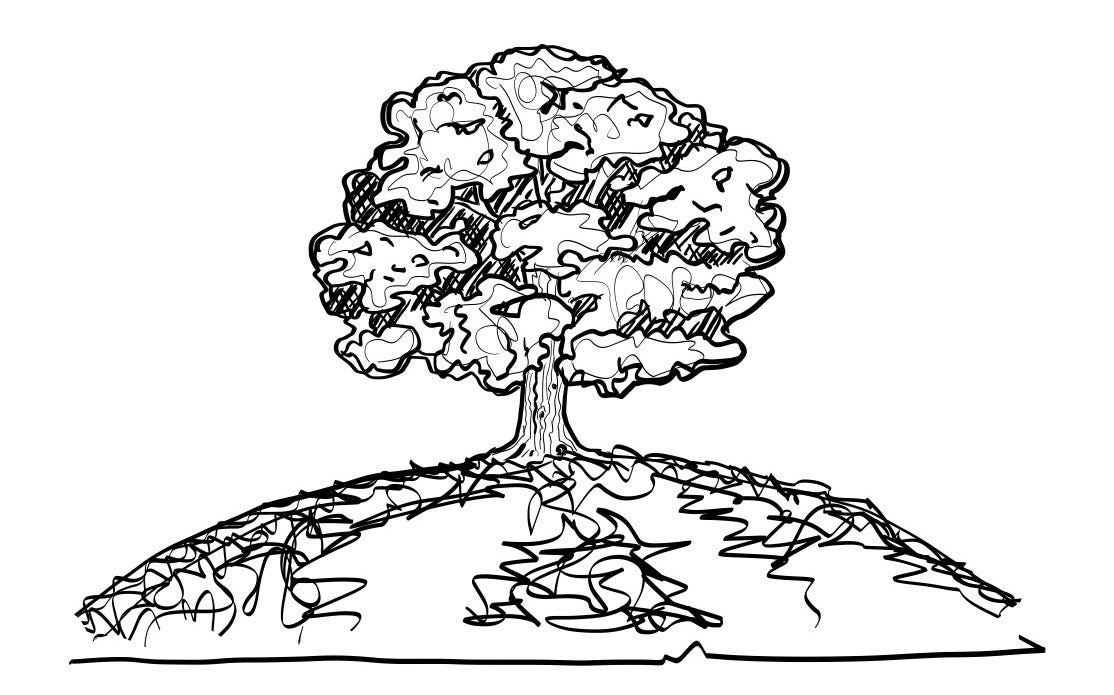
When I was little we called it ‘the lonely tree’ as, from down below, it seemed to stand alone, atop a closely grazed hump of a green hill. People in town also knew it as the lonely tree and gazed up at it.
Going from our gate to the lonely tree is the kind of walk that puts children off walking. Just 10 minutes, but immediately steep, up hill all the way, no rest until you get there. The valley is wet but rarely very cold so this is usually a sweaty effort.
The lonely tree seems to be on a hill above town, but this hill is just the first of more hills behind, then the higher shelf of the ffridd (middle grazing with the farm houses dotted in it), and beyond that the wild open grazing ‘on the mountain’ where the sheep are loose all summer, then the abrupt rock wall and bare ridge of the mountains. If you ask farmers here about where their farm ends they say ‘the horizon’ and mean it. Of our mountains, Cader Idris is the well known one, but our family favourite is the closer, and marginally smaller and wetter sister, Mynedd Moel, along the ridge further from the sea. A brisk two hours from our gate to the top - steep all the way1. The view of Mynedd Moel is particularly striking from the CO-OP supermarket car park.
W. and family - sheep farmers - live and farm up on the ffridd including a little hill farm that helped shape modern America - Bryn Mawr2. From up there our lonely tree is lowly, barely notable, the last of many, many trees that they look on from above. From their perspective, unremarkable and not lonely at all.
In the 50 plus years that I have been looking up at it, the hill of the lonely tree has been progressively less intensely grazed by sheep and the bracken left uncut, now just by me scything along the lowest path3. In front of the lonely tree the bracken-covered slope falls away towards the town, and is precipitously steep. I know because I slid down much of it on my backside last Sunday while chasing the dog.
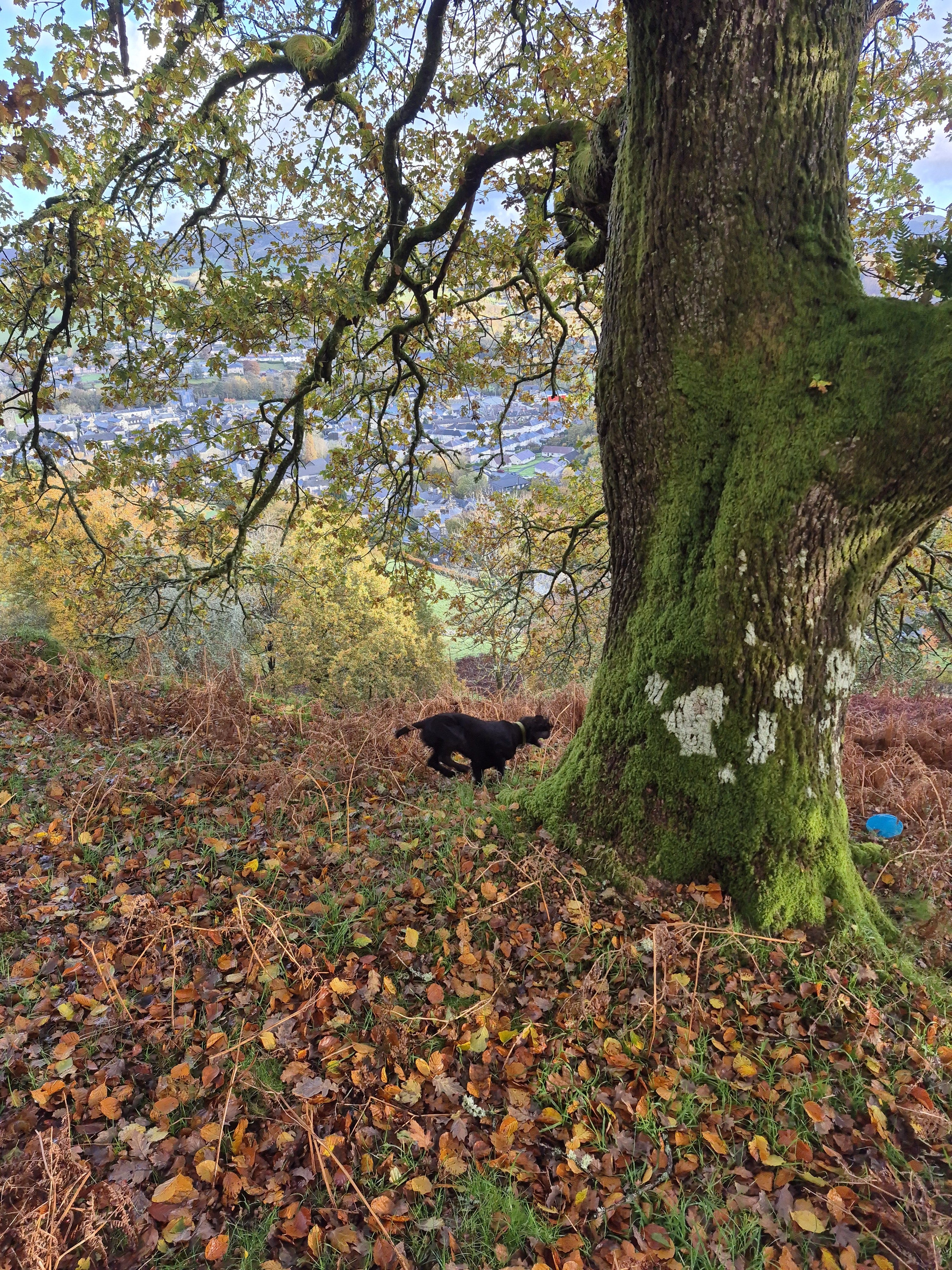
When we were kids our Nain (grandmother) had a great trick for keeping us out of the bracken on the steep slope - ‘there is a hidden hole, 6 feet deep, and a boy fell in and broke his legs4’. We did venture in once though, and I can still feel the terror - we were certain that we had seen a man with a bright red face lying asleep in the bracken, and we raced all the way home. In those days, ‘tramps’ were still an occasional feature of country life. Itinerant, rough sleeping travellers doing some farm labouring when opportunity came. The red faced tramp lives on in family memory. Maybe he was real.
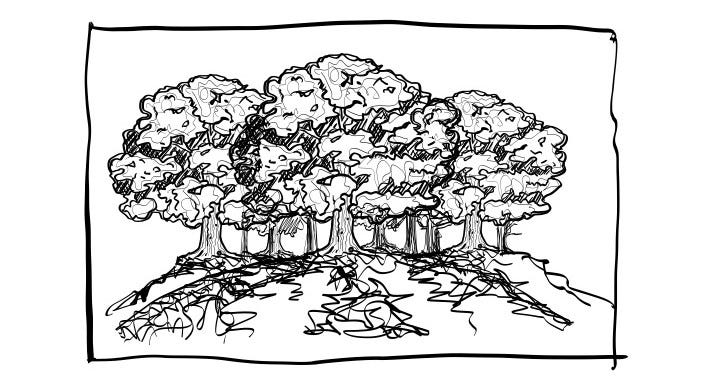
The lonely tree has neighbours now - they stand slightly behind it, but in summer look like a small team, jostling. You can see this change in photos taken over the last 70 years. You now need to know it to spot it.
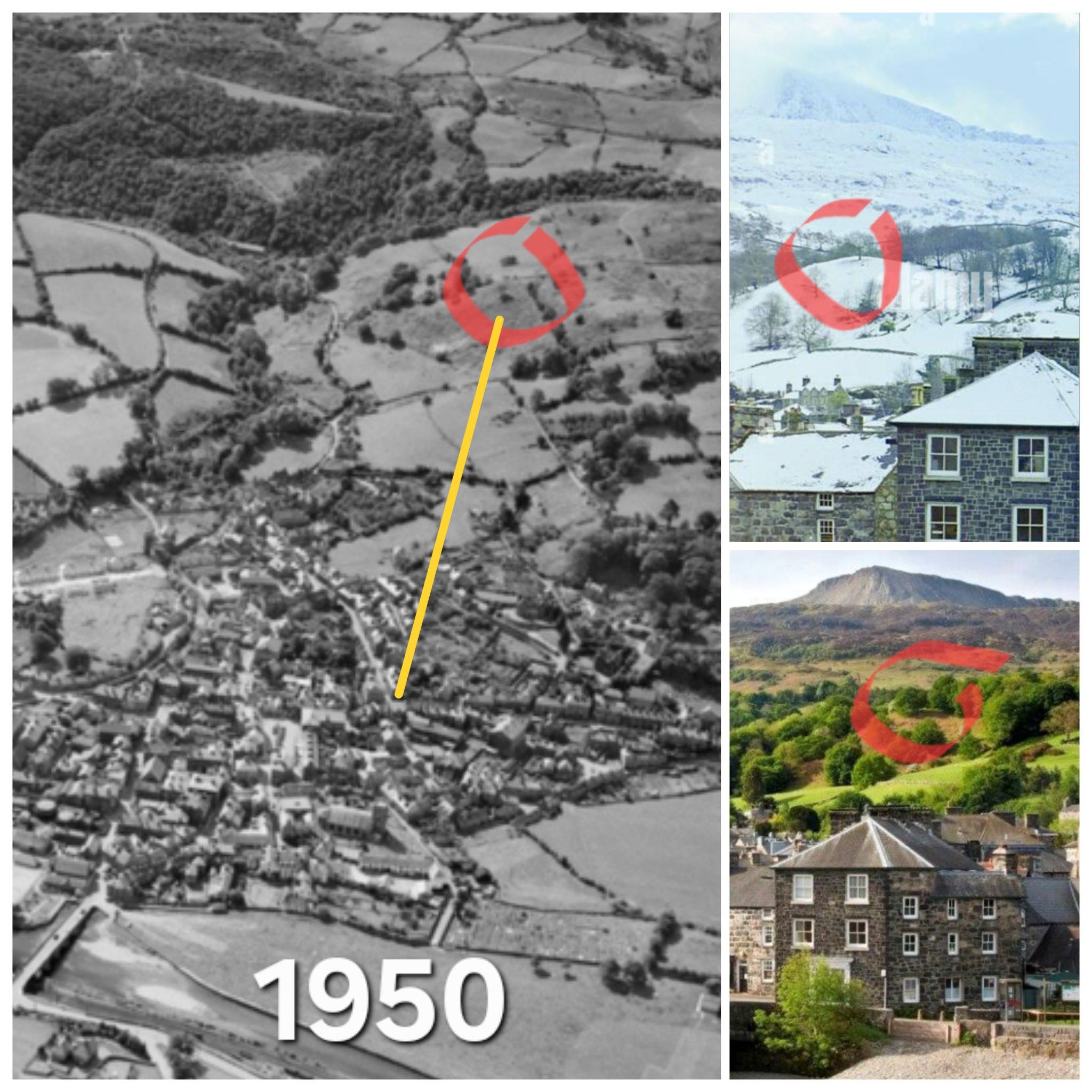
Lonely is a state of mind
But some people still remember the tree’s loneliness, and there are occasionally flowers - some real in cellophane, some actually plastic - laid at the base of the tree. Memories of loved one, and their scattered ashes too. Farmer W finds these flowers around the tree when he fixes the fence or checks the lambs, and asks why anyone would leave them here, the last of many trees on the mountainside, and a steep walk and a vault over barbed wire to get close? An up close it is unremarkable. Just a tree with a view over town. To me a metaphor for ideas of perspective and ‘positionality’.
For people in town over a certain age it is still the first tree, the lonely tree. I feel happy that other trees are crowding in (no-one is planting them - they are self-seeded and less intense grazing gives them a fighting chance), and am wryly interested in the rapid evolution of human culture. Plastic flowers left for loved ones, looking down on the town from on high. From the base of the tree I can just about see the cemetery where my grandparents are buried5. The cemetery also has a particularly badly kept secret - the final resting place of a man widely rumoured to be the unacknowledged son of a very senior member of the royal family. Take a look at the jolly portrait hanging in bar of the Torrent Hotel.
Too late to Instagram our lonely tree. Others are available.
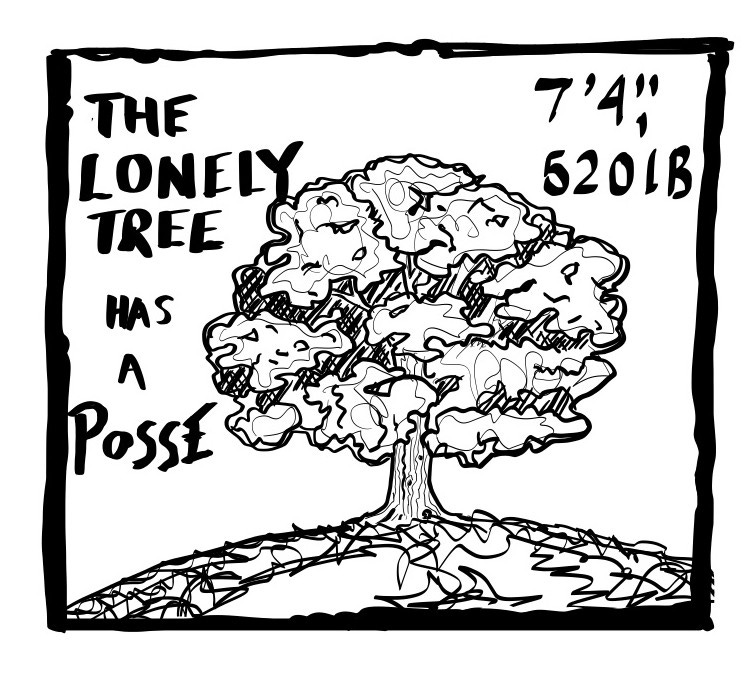
In my mind the lonely tree now has a posse6, some mates, a family, solidarity.
I meet a new neighbour as the dog walks me home. I tell them ‘we’ve been up to the lonely tree’, pointing.
“That’s not the lonely tree. That one is”. They point to a different tree on a different hill. But lonely looking.
If you google ‘lonely tree - north Wales’ you will see a good range of lonely trees7. They seem to fulfil some kind of human - and Instagram - need. I hope that there is also solidarity between the scattered lonely trees. England also has a thing about lonely trees8 though our lonely tree remained untouched by Kevin Costner9. Or chainsaw.
Easter eggs in the footnotes…
Daughter #1 is named after Cader Idris, but ‘Moel’ means ‘bald’ so Daughter #2 does not have a mountain in her name.
It’s a beautiful and wild place, but also has an international significance. One of the farms on this ffridd is Bryn Mawr, which was the home of the Quaker Rowland Ellis. Ellis (1650-1731) and other Quakers fled religious persecution and emigrated to Pennsylvania, and the town and college of Bryn Mawr were named after his farm. I know because our late friend and distant cousin - Wil Bryn Mawr - used to farm it.
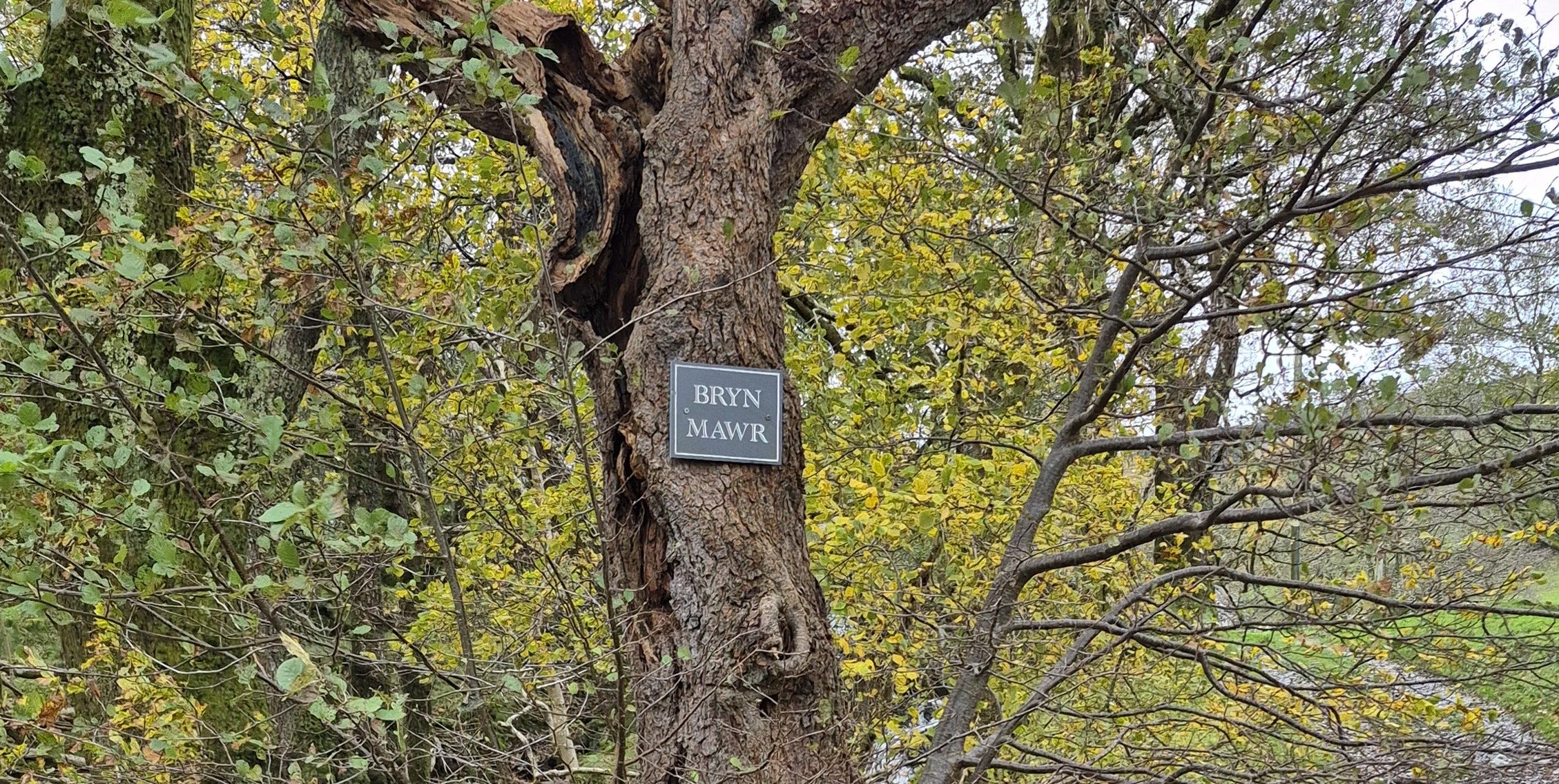
We cut the bracken so that people will walk on the path, and so keep trampling the bracken. Otherwise out of fear of ticks and the very nasty lyme disease, they stop using it, and the bracken just takes over. Beware of ticks and check your legs, but please don’t stop trampling the bracken.
Her brother Bob really had fallen into a deep hole - a quarry - when trying to rescue a sheep, and his leg injuries meant he never farmed again. Instead he became a travelling AI specialist. The earlier kind of AI.
That’s where I intend to be too, gently nibbled by Welsh worms. No plastic flowers please, but I don’t judge the rapidly evolving funerary rights of others.
In my mind (as a sometime student of street art), this is like Andre the Giant having a Posse: https://en.wikipedia.org/wiki/Andre_the_Giant_Has_a_Posse
https://www.dailypost.co.uk/news/north-wales-news/sad-fate-awaiting-wales-best-30666007
https://en.wikipedia.org/wiki/Sycamore_Gap_tree
https://www.bbc.co.uk/news/uk-england-tyne-67206534